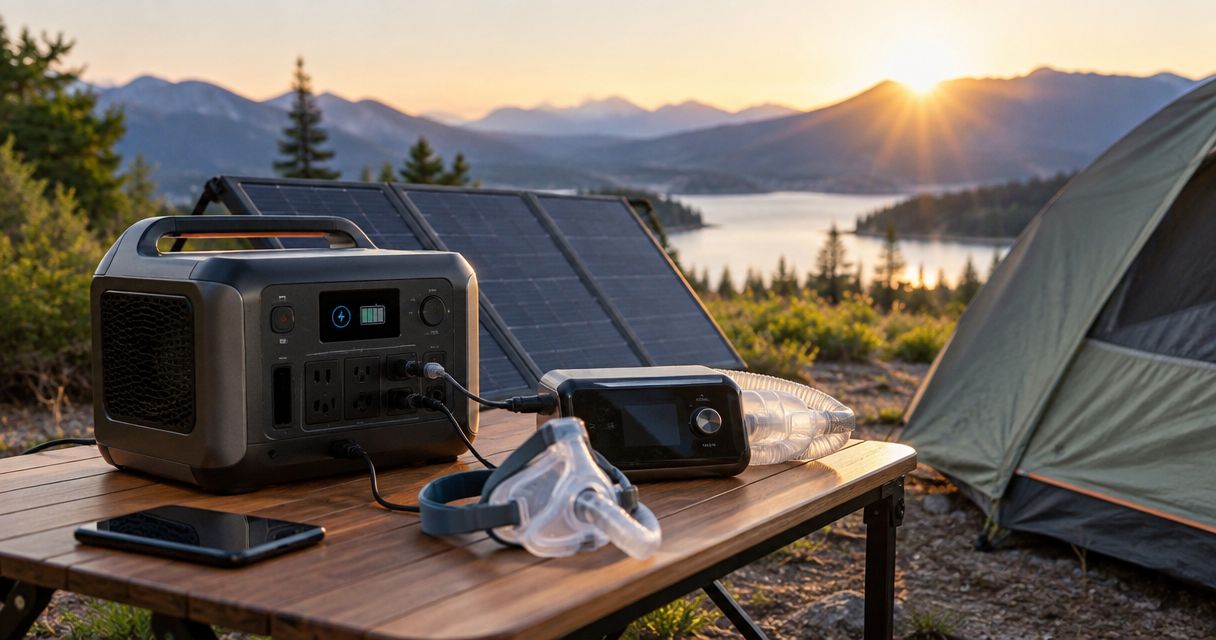
Best overall for small-device backup: Jackery Solar Generator 300 v2. Best for a second generator shortlist: Jackery Solar Generator 1000 v2. Neither has enough verified information here to call it a whole-home backup solution. GJB Products lists both, but the right purchase depends on the devices you need to run and the charging equipment included with the listing.
- The best solar generator for home backup power depends on your device loads, not the product name.
- Jackery Solar Generator 300 v2 is the documented small-device pick, with 288 Wh capacity and 300 W output.
- Check the Jackery Solar Generator 1000 v2 listing for output, capacity and included solar equipment before choosing it.
- Neither listing establishes a verified whole-home backup option.
Why this matters
A dead phone and a stopped refrigerator are different backup problems. One calls for relatively little power; the other has a motor that draws extra power when it starts. A generator that can charge your phone is not automatically suitable for an appliance.
GJB Products sells portable solar products for consumers who want backup power. That makes its GJB Products store a place to compare portable options, but choose by the load you need to support, not by the word solar on a listing. In 2026, check both the power station and the equipment needed to recharge it before you order.
What makes the best solar generator for home backup power
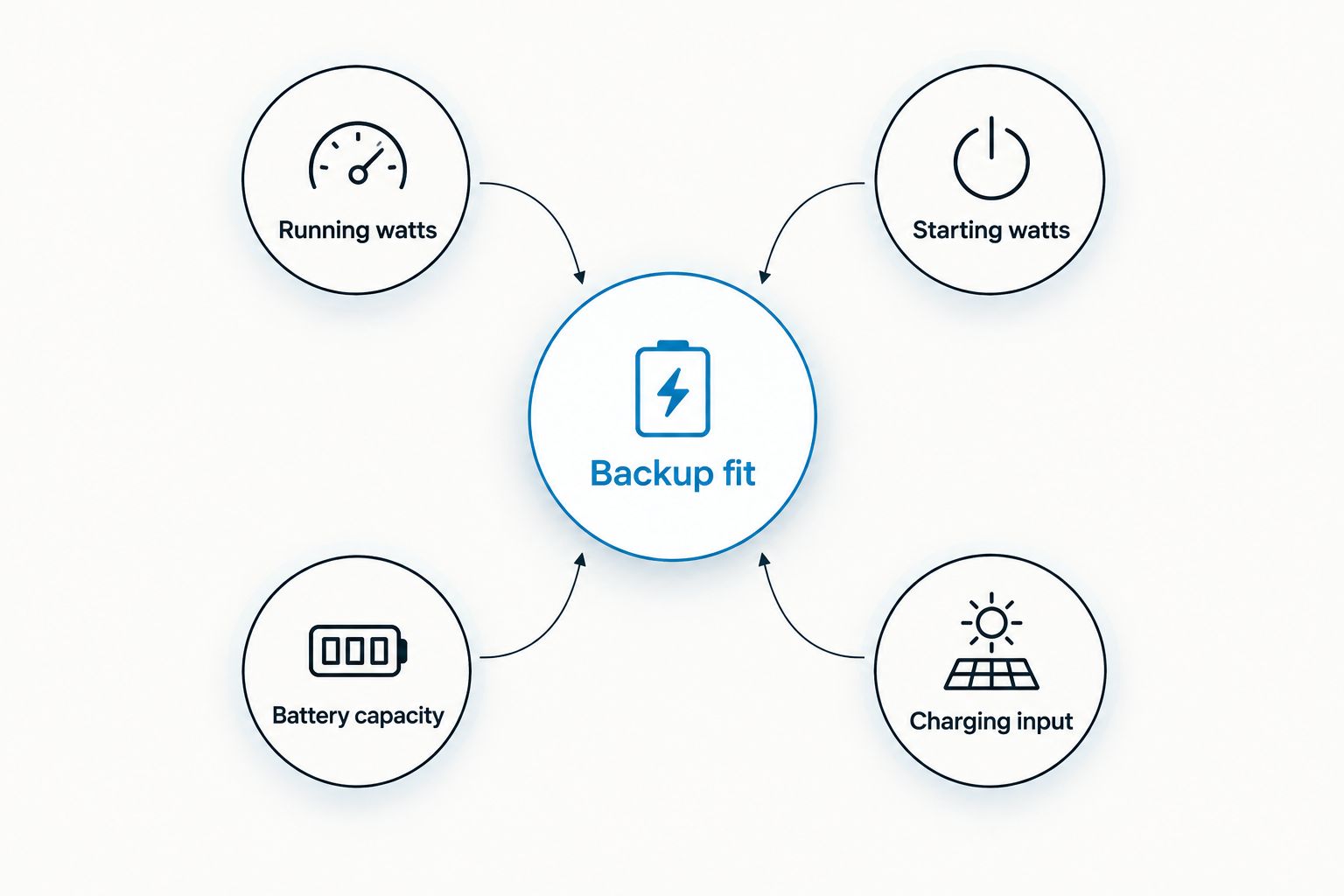
Use these checks before comparing the picks. A product earns a recommendation only for the job its stated information supports.
- Running watts: Add the power draw of devices you intend to use at the same time. The generator's continuous output must cover that combined load.
- Starting watts: Check appliances with motors or compressors separately. Their startup demand can exceed their normal running draw, so a running-watt match alone is not enough.
- Battery capacity: Capacity, stated in watt-hours (Wh), helps you assess how long a load can run. It does not tell you which appliances the outlets can power.
- Charging input: Confirm how the station charges, what solar input it accepts and whether the equipment you plan to use is compatible. A product called a solar generator does not establish that a panel is included.
- Included equipment: Read the current listing for the station, cables and any panel. Do not base a backup plan on an accessory that has not been confirmed.
- Backup scope: Decide whether you need portable outlets for selected devices or power for household circuits. Do not treat those as the same setup.
Keep your device list beside these criteria. If you cannot find a required specification on a product listing, leave that product off your final shortlist until you can confirm it. This is especially important when you plan to run an appliance rather than charge a small device.
A solar panel addresses recharging; it does not raise a power station's stated output. Likewise, a large battery is not proof that the unit can start every appliance you own. Output, capacity and charging are separate checks.
At a glance: the 2026 generator shortlist
| Item | Best for | Standout feature | Key limitation |
|---|---|---|---|
| Jackery Solar Generator 300 v2 | Backup for qualifying small devices | Listed 288 Wh capacity, 300 W stable output and 600 W surge output | Its stated output rules out loads above those limits; panel inclusion is not established here |
| Jackery Solar Generator 1000 v2 | Buyers prepared to verify a second generator option | A named solar-generator listing to assess against a device list | Capacity, output and included solar equipment are not established in the supplied information |
The table is a shortlist, not a promise that either unit runs an entire home. Its first row has enough stated figures to assess some loads. Its second row needs specification checks before it can earn a recommendation for any particular appliance. The model number is not a substitute for those checks.
1. Jackery Solar Generator 300 v2: best for documented small-device backup
The Jackery Solar Generator 300 v2 is the clearest pick here because its listing information states 288 Wh of capacity, 300 W of stable output and 600 W of surge output. Those figures give you a starting point for checking devices. They do not establish runtime for your particular mix of devices or confirm that a solar panel comes with the unit.
Use the 300 v2 as a shortlist candidate when you want to keep selected small devices powered and can verify their requirements. Check each device's label or documentation, then check whether the station has the outlets and charging connections you need. If an appliance exceeds the stated output, choose a different station rather than hoping it will work.
Jackery Solar Generator 300 v2 pros:
- Its 300 W stable output gives you a stated limit to compare with your running load.
- Its 600 W surge figure gives you a separate startup-power specification to check.
- Its 288 Wh capacity gives you a stated battery size for planning.
Jackery Solar Generator 300 v2 cons:
- Its stated output does not cover devices whose requirements exceed its limits.
- The supplied information does not confirm which solar panel, if any, comes in the package.
- A capacity figure alone cannot establish how long your exact devices will run.
Jackery Solar Generator 300 v2 pricing: Check the current GJB Products listing before ordering; no fixed amount belongs in a backup plan.
Best for: A shopper who can match selected small-device loads against the published output and capacity.
Verdict: Buy for verified small-device loads; skip it for a load you cannot match to its specifications. GJB Products' solar-generator selection is useful here because this listing provides actual figures, not just a category label.
2. Jackery Solar Generator 1000 v2: best for a spec-checked second option
The Jackery Solar Generator 1000 v2 gives you another named solar generator to consider. Its supplied description does not establish the capacity, continuous output, surge output or included solar equipment needed to recommend it for a defined household load. Do not assume the number in its name is a watt-hour or watt specification.
Put this model on your shortlist only if you are willing to check the current listing against your device list before buying. Look for battery capacity, continuous and surge output, outlet types, solar-input requirements and package contents. If a refrigerator, medical device or other critical load is involved, confirm that load's requirements and the station's documented capabilities before relying on the pairing.
Jackery Solar Generator 1000 v2 pros:
- It is explicitly listed as a solar generator, rather than an unrelated solar-powered accessory.
- It gives shoppers a second generator listing to evaluate against the same load checklist.
Jackery Solar Generator 1000 v2 cons:
- The supplied information does not establish its usable capacity or output.
- Panel inclusion and compatibility are not confirmed by the supplied information.
- No particular appliance or runtime can be recommended from the information available here.
Jackery Solar Generator 1000 v2 pricing: Check the current GJB Products listing rather than relying on a figure in an article.
Best for: A buyer who wants a second generator option and will verify every load and charging requirement before ordering.
Verdict: Hold until its specifications and package contents match your backup plan. A named model is a useful starting point, but it is not evidence that the unit meets your household's needs.
Match the generator to your backup plan
Start with the devices you cannot do without. Write down which ones must run together, which can take turns and which need power only to recharge. That separates a portable backup plan from the much larger question of supplying household circuits.
Make a device list before comparing products
For each device, find its running power requirement. For anything with a motor or compressor, find its starting requirement too. Check the unit used on the label: watts describe power draw, while watt-hours describe stored energy. Confusing the two can leave you with a battery that has capacity but cannot deliver the output your device needs.
Next, compare simultaneous running loads with the station's continuous output. Check startup demand against the relevant surge specification, then assess capacity for the time you need power. When any of those values is missing, you cannot complete the match from a product name alone.
If your plan depends on one critical device, check its documentation instead of substituting a generic example. The Jackery Solar Generator 300 v2 provides figures to compare. The supplied information for the Jackery Solar Generator 1000 v2 does not yet provide the same basis for a decision.
Treat solar charging as a separate purchase check
Ask whether the listing includes a panel, then confirm how that panel connects to the station. Check the station's accepted solar input and the panel's output and connectors before treating them as a pair. A portable solar panel sold elsewhere in the catalog is not automatically compatible with either generator.
Think about when you will recharge as well as what you will run. If you expect to use the station while power is out, understand its available charging options and follow its operating instructions. Solar recharging depends on light and the matching equipment; the word solar does not promise a fixed recharge time.
Finally, inspect the current package contents. A station, a charging cable and a solar panel are distinct items unless the listing explicitly says otherwise. This check prevents you from ordering a station expecting a complete solar setup and discovering that you still need to confirm the panel.


How the 2026 picks were ranked
The order reflects how much of a backup decision the supplied product information supports. Jackery Solar Generator 300 v2 ranks first because its capacity, stable output and surge output are stated. Jackery Solar Generator 1000 v2 ranks second because the information supplied here does not establish comparable specifications.
That is a ranking by verifiable fit, not a claim that the first unit is stronger or suitable for more devices. GJB Products also lists a Nature's Generator Power Pod, but its description identifies it as an expansion battery designed for a Standard 1800 system. It is not a standalone generator pick for someone starting without that system.
In 2026, neither generator earns a whole-home recommendation from the available information. To make that claim, you would need confirmed output, capacity, connection requirements and a defined household load. This guide does not substitute a product name for any of them.
Which solar generator should you choose?
Choose Jackery Solar Generator 300 v2 as the default for a documented small-device shortlist, provided your devices fit its stated output and you confirm the connections and package contents. Its published figures let you make a meaningful first comparison.
Choose Jackery Solar Generator 1000 v2 only after its current specifications support the devices and charging setup you have in mind. If your goal is whole-home backup or an unverified critical appliance, choose neither from this information alone. Build the load list and confirm the complete setup first.
The best solar generator for home backup power in 2026 is the one you can match to a specific job. A generator that suits selected devices can be useful without pretending to replace power to every circuit in the house.
FAQ
What's the best solar generator for home backup power in 2026?
Jackery Solar Generator 300 v2 is the best documented pick here for qualifying small-device backup. Its stated 288 Wh capacity, 300 W stable output and 600 W surge output must still match your devices; neither listed generator is verified here for whole-home backup.
Can Jackery Solar Generator 300 v2 power a refrigerator?
The supplied information does not establish that it can power your refrigerator. Compare that refrigerator's running and starting requirements with the station's 300 W stable and 600 W surge output, then check its connection requirements.
Is Jackery Solar Generator 1000 v2 better for home backup than the 300 v2?
The supplied information does not establish which is better for a particular home backup load. Check the 1000 v2's current capacity, continuous output, surge output and package contents before comparing it with the stated figures for the 300 v2.
Does a solar generator include a solar panel?
A solar generator's name does not confirm that a panel is included. Check the current package contents and the station's solar-input requirements before ordering a panel or relying on solar recharging.
What's the difference between watts and watt-hours for backup power?
Watts describe the power a device draws or a station supplies at a given time; watt-hours describe stored energy. Check both output and capacity because neither figure answers the other's question.
Is the Nature's Generator Power Pod a standalone backup generator?
The supplied description identifies it as an expansion battery designed for a Standard 1800 system, not a standalone generator. Confirm the required base system and compatibility before treating it as part of a backup setup.
How much does a home backup solar generator cost?
Check the current product listing for the amount you would pay. For a useful comparison, confirm whether the listing includes the station, a compatible panel and the connections your plan requires.
One last thing
Do not buy the expansion battery by mistake. The Nature's Generator Power Pod belongs to a specified system, while a small solar charger or outdoor light serves a different job entirely. In 2026, confirm that the item you are ordering is the power station your device list calls for.
Related guides
- RV flag poles: telescoping and ladder-mount picks — a separate outdoor-display guide, not a source of backup-power specifications.